KM says …
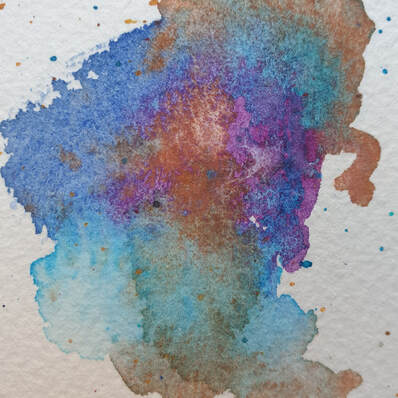
Mixing pigments! Trying to learn off You tube as best I can. Also paying for a few zoom sessions. No one mentions pigment numbers. I hear a name, but different brands use different pigments and different names and granulation varies for same pigment but different brand! I've mixed a lot of Mud from not paying attention to the number of pigments. I have a mostly transparent palette. I know, I know. Learn by doing and learn from experience. Love your positivity! Have a great time in Italy. Cheers KM The problem with pigment numbers is that every manufacturer has their own recipe for a colour starting with a particular pigment, numbered and annotated on the colour label. And that’s pretty much where it ends! Each manufacturer’s recipe will include other processes (eg kiln firing) and other additives and binders that, in varying quantities change the appearance of the colour name, making each a unique blend resulting in a unique colour. For example Transparent Orange is the same pigment as Light Red but light red undergoes kiln firing which alters it’s characteristics to create a different colour, level of opacity, granulation etc etc. somewhat similar to Winsor Blue red and green shades. Sometimes a pigment number can help you find a hue in another brand – one of my favourite painters uses a different brand to me, I love her colours – what’s more, I managed to find them using the pigments numbers cited by the manufacturer. This was a lucky find as I discovered I had the correct colours already in my favourite brand – they’re close enough given different computer monitor settings etc. There is much discussion about only using “single” pigment colours. This is really a misdirection … I regularly use 6, 7 and 8 colours to achieve the value and temperature my painting needs. I also regularly use a brand known for combining 3-4 pigments – I’ve never had a problem mixing their colours. This leads us to colours labelled as “hue”. In other words, a combination of pigments to achieve the colour of a particular pigment, eg Cobalt blue hue. The characteristics may differ ever so slightly from the genuine pigment, I assume this is to keep prices down for very expensive pigments eg cobalts, or reduce reliance on increasingly rare pigments eg quinacridone gold. Focus on irrelevant elements just take us away from painting and feeds our fear with details that may or may not impact our painting - we just need get on with it!! non ferma cari amici!! 
0 Comments
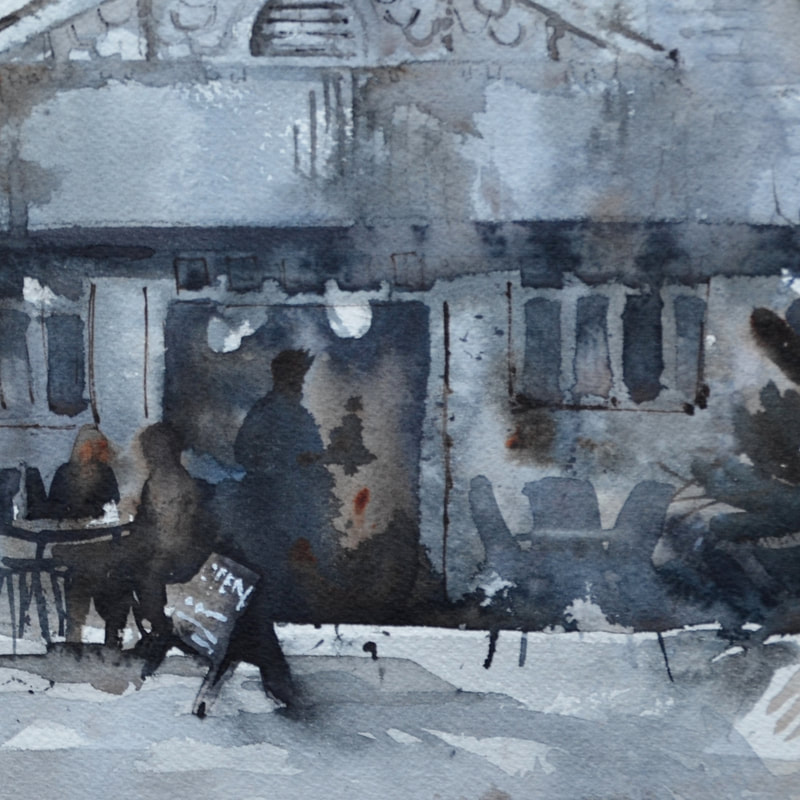
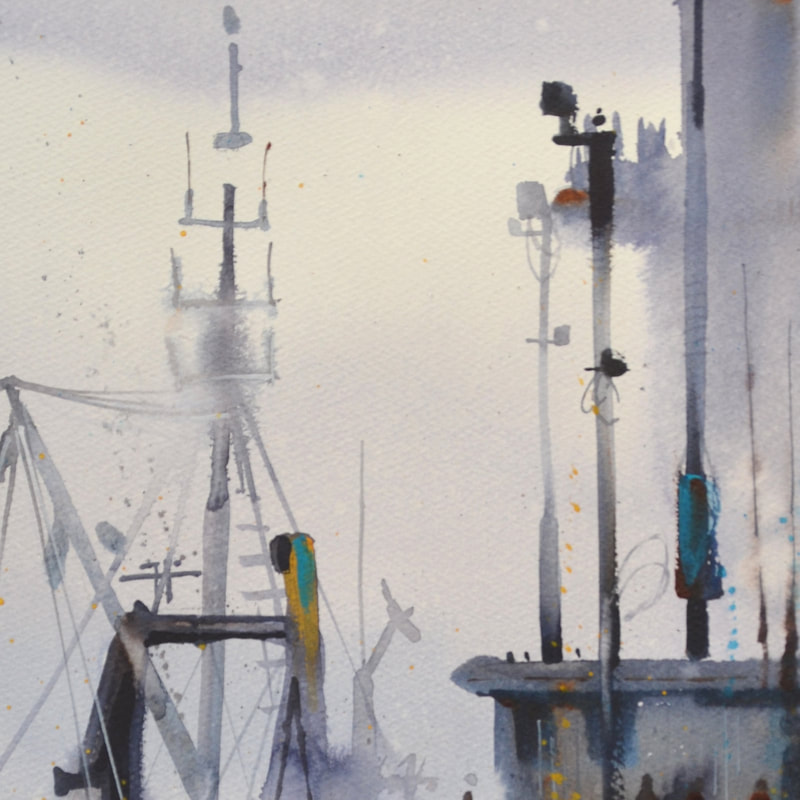
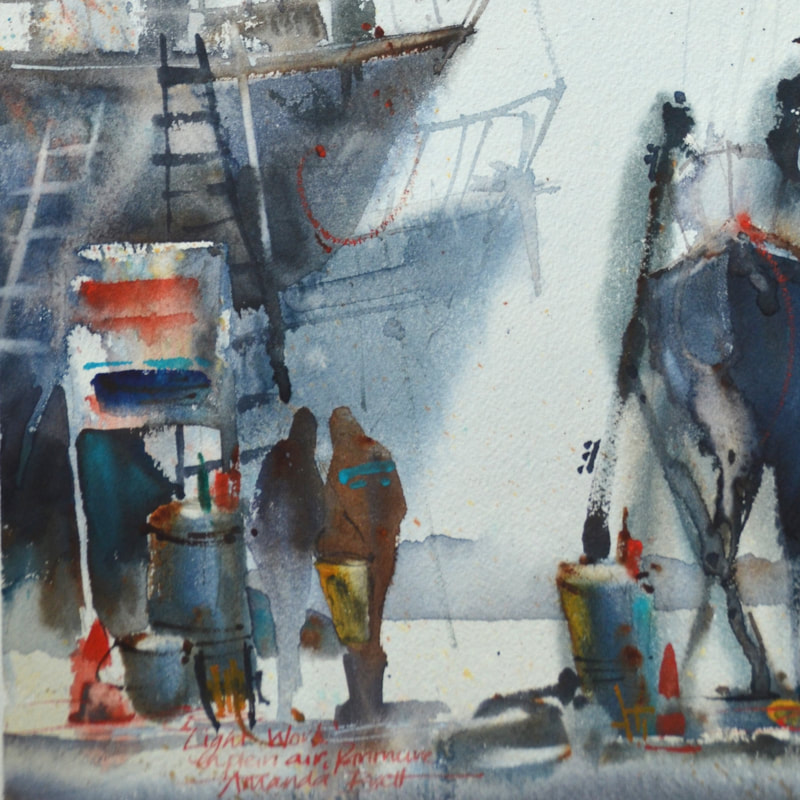
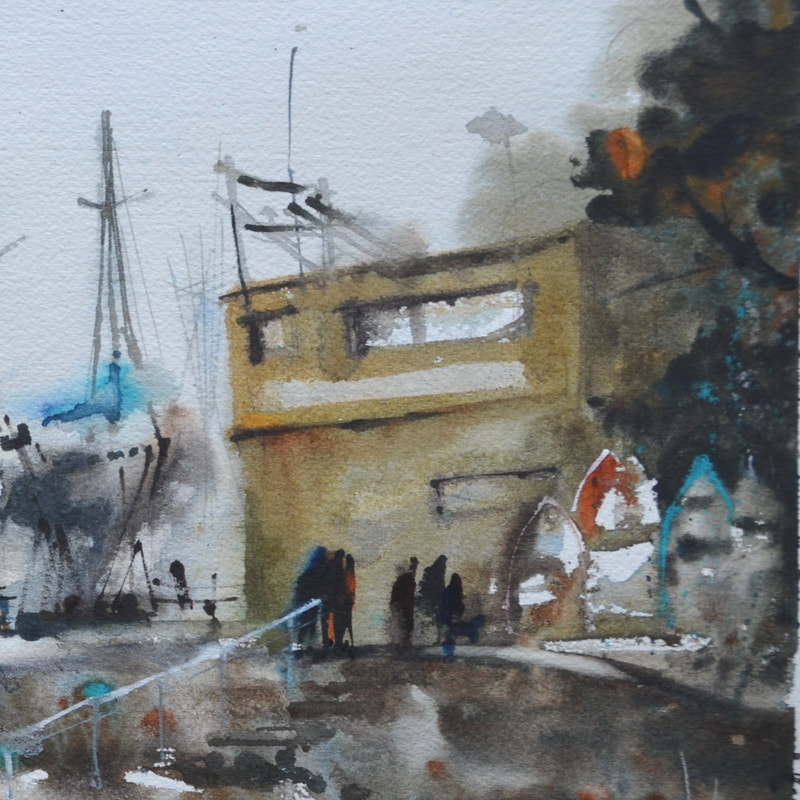
To be truthful, for me, grey is the most frightening colour – I don’t wear grey, I don’t like looking at it, I don’t have it in my house and I HATE grey cloudy days! So when I was told recently that my “greys” were greatly admired I was quite floored, this started a renewed process of investigation, what greys do I create and how do I use them?
Firstly, good quality watercolours are made from natural minerals (pigments) and due to these natural qualities, react and bounce off each other, quite fun to watch and experiment with. Manufactured blacks and greys are mostly made from a kiln firing process therefore they contain soot - for large washes they can be lifeless and dull and often dry substantially lighter than expected. Secondly, in watercolour, our staples are our complementaries (red vs green, purple vs yellow etc). For example, to neutralise red, I add a little green, a secondary colour containing blue and yellow. When I add green to red I have 3 primaries which means the greying process is started. I paint with tube paints and carefully select transparent watercolours, mostly I use Winsor & Newton pigments and then I add opaque or earth pigments for accents. My favourite palette includes winsor blue (red shade), permanent alizarin crimson and burnt sienna. Sometimes I swap the blue for winsor blue (green) or French ultramarine and alizarin for permanent rose or another transparent “pink” like permanent magenta. I choose this palette because each of these colours have good tinting strength, therefore this palette, with just enough water to mix, will make an exciting and fresh dark and, with diluting, will create fantastic luminous greys. I start by making a violet, for shadow areas a cool violet (ie more blue, less red) and depending on the palette of the day, I may add burnt sienna. For silvery greys try cobalt blue and permanent alizarin for a gorgeous violet then add just a wee touch of raw sienna or try winsor green and permanent alizarin or rose. Cerulean blue or cobalt blue plus burnt sienna, for darker greys try french ultramarine or indigo with burnt sienna. As you can see the sky’s the limit but of course this all depends on the pigments in your palette and what you can do with them – a matter of experimentation. To start with, I mix light value greys in my palette but I make sure I can still see little pockets of the ingredient colours; in other words, sloppy, inefficient colour mixing is best, partly because it ensures there is no accidental overmixing and further, it allows the poetry of watercolour to show. After washing in a light value Grey around whites, I mix a stronger grey with the same pigments but in different ratios so that, for example, I wash a warm grey over a cool grey. I then select one of my accent colours and charge it in and then spatter some of the other colours while it’s still damp. For me watercolour is about poetry, creating beauty and light and life. As Delacroix said 'Colour is the fruit of life' and developing a repertoire of greys will only enhance your colour work. have fun!! ciao Amanda
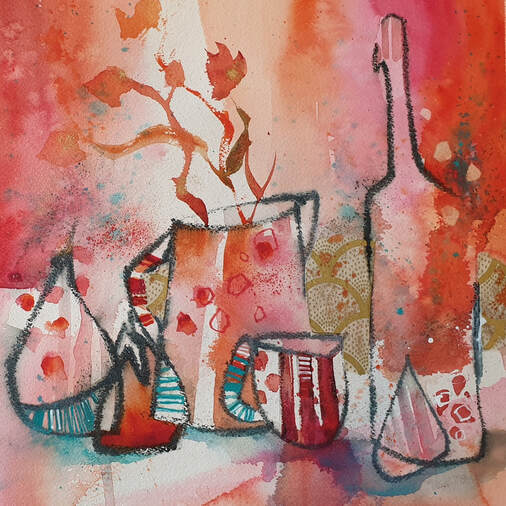
One of the reasons I love watercolour painting is the speed at which I can achieve a painting. If and when I'm clever, I can have a painting today! It took me a long time to get to this point - I've been painting watercolour close to 30 years - it's not an overnight process!!
A huge obstacle for watercolour newbies is allowing the watercolour to have it's way. There's a saying "before I paint, I'm in control, once I put that brush down the watercolour takes over". The secret is, until you get a really good feel for water balance in your brushes, paint and paper, you need to let go and stop trying to control the uncontrollable. Watercolour, as it should be painted, will be difficult for you. Embrace "mistakes" and "accidents", runs and bleeds and allow the painting to speak to you and tell you what it wants. Have another read of my webpage "About Me" and note the last sentence - "I love watching paint dry!" Stop fiddling and controlling and start watching what the paint does and note that where the water goes the paint will follow. You'll start to notice the really cool effects and passages - watercolours will paint themselves if we let them and they'll certainly do it much better than we can! When we're painting watercolour it's time to stop and smell the roses! The scary secret is, you might not get the results you wanted or expected and you certainly might not know what to do next - that's the shock of it!! Use your artist's sense of composition, value structure and design to decide next steps - does it need more darks or lights? are the shapes correct? is it balanced and unified, etc etc. Make a cuppa and watch the paint dry!! ciao i miei belli amici!! Amanda |

AuthorPaintBox Tips, secrets, random thoughts, 
Poetry in watercolour is made in the freedom of the here and now. Amanda Brett Inspiration exists, but it has to find you working - Pablo Picasso 
There are no mistakes in watercolour, just some extra surprises!! Categories
All
What my readers and viewers have to say
Your emails are so informative! I must confess I've watched a couple of your demos from beginning to end, and it makes me want to watercolor!!! I've only ever painted with oil or acrylics and haven't know how to begin with WC. Your content is excellent!
Susan VN Hi Amanda
Thank you for your tips. They inspired me to practise and I realised I haven’t been loading the brush properly. I learnt about adding more paint, and not water, to washes. In today’s tips I like the idea of painting with purpose. Your tips are very helpful. I very much appreciate receiving them. Elizabeth Hi Amanda I enjoyed your post and generous tips. Looked up Dan Burt I begin to see that you can colour any subject to give it pizazz so long as the tone and form is correct Certainly adding value now to my attempts Thanks heaps Annie
Yes very wise words. Agree with not fussing and agree with comments about good quality paint. Well written and inspirational as always. Cheers Janet xxxx Archives
July 2023
Copyright © 2022 All images and text on Amanda's blog and website are the the legal property of Amanda Brett and may not be reproduced without express permission from Amanda Brett or her authorised agent. Thank you for respecting her art and the livelihood of all artists.
|