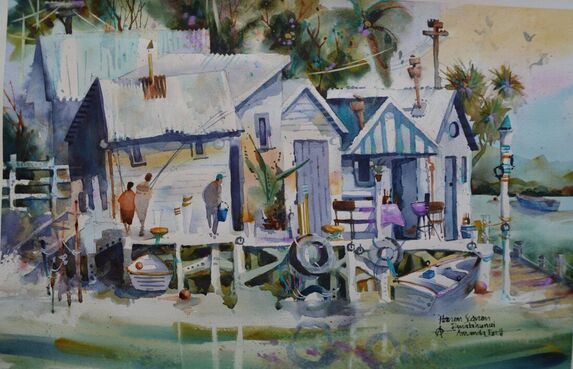
 Harum Scarum, WNZ demo painting July 2021. 5th painting in my Pauatahanui series Harum Scarum, WNZ demo painting July 2021. 5th painting in my Pauatahanui series
My workshops on how to generate design ideas came about because a student said they were not ever able to get a “good” photograph of the scene.
I worked very hard on the design of “pauatahanui” and the ensuing series because it’s a popular scene to paint. So how could I make mine different? I got all excited and had to see these boat sheds for myself (aka ROAD TRIP!!). It took 6 months to create a design concept I was happy with. So the subject of this workshop became how to design a painting and not be reliant on good photos because good photos are rare and don't miraculously turn up when required! Somewhat akin to how to paint from a bad photo. Another thought, it doesn't take courage to paint what you see - it does take courage to paint what you think and feel. I often turn away from my reference, it was pointed out to me some years ago that I rarely “look” at my subject. Through my study and observation I begin a path of understanding. I take reference photos, I create thumbnail studies which lead me to my design idea - I want my work to be unique, I want the essence of the subject, I want it to be from me. So, how to be less reliant on photos? it's all about getting an idea. one thing I must say to you is that, generating ideas is not easy, like everything it takes consistent and frequent effort. My typical practice revolves around drawing/designing (en plein air or in my studio) a thumbnail and doodling some of the shapes I think I will want. What do I like or not like? Leave out, add in, bring something relevant in from another scene. This is where I get to know my subject and the relationships of the other elements to each other. I have sketched/painted many boat yard scenes so I feel confident about bringing ideas in from previous study. And that's what this is about - study and observation. Even though I have no intention of creating a photographic realism painting, I need to understand shapes, light and dark, perspective, values etc to create a work based on simplified shapes. what could i do that was different/better? Firstly, I have the power of watercolour's fluidity; secondly, a unique composition. So the idea became the jumble and chaos of boatsheds and the ensuing detritus. ciao Amanda
2 Comments
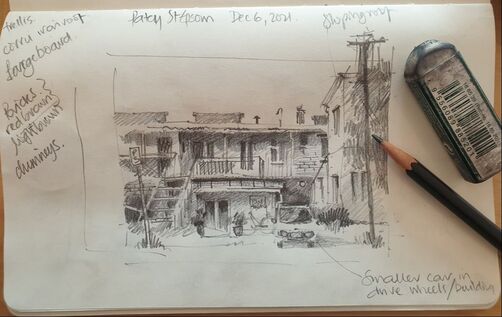 with my notes about why I wanted to paint it, mostly memory joggers with my notes about why I wanted to paint it, mostly memory joggers
Hello there *|FNAME|*
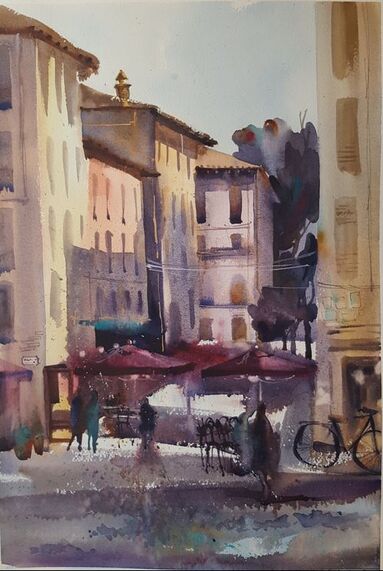
Students often struggle to understand what their painting is about. This understanding is key because it's all wrapped up in your story and what you want to say. It follows that students often feel they have little of import to say therefore their painting is irrelevant. Your story is important because it will help you design a work that you are passionate about and will help you to focus on the important elements that attracted you in the first place. Thereby helping you avoid over-stating support and background elements. What am I most interested in? your painting (story, poem, sculpture, composition, drawing etc) must have a purpose and, yes, the purpose can be learning or just because you want to but more than this – why paint it? What is it about? What drew you (pardon the pun) to want to paint it? Without your want, your passion to paint it, there’s no story, there’s no purpose. Might as well put your best foot forward and crack it! We’ve talked about this before, sometimes it comes down to making yourself want to paint “it”. Do your research, study your subject, create design thumbnails etc (this research and study also has another purpose for discussion later). Design your painting, what can you use to create a painting with strong design? So what made you want to paint this? Was it a fleeting light? Shapes interlocking and overlapping that piqued your interest? Unusual colours juxtaposed? A strong light/dark contrast? People involved in some interesting activity? An idea – what if I put this with that? Whatever it was that intrigued you is your story. It’s really only necessary to explain it to yourself, to keep you on track, write it down. So then your painting becomes a concept about how to tell this story and the visual language you’ll need to tell it. For example, let’s talk about a stiped canopy. I might want a strong light and use the stripes and shadows to help me describe the shape of the canopy. There’s probably a door or a window under the canopy, this could be used for a strong value contrast – lightest light against the darkest dark. There might be a group of people nearby, can you link them to the canopy/doorway? Is it a shop, they’re going to walk through the door? People walking out with shopping bags filled with goodies. My focus must stay on the canopy and elements that help me describe the scene and the story of the canopy, maybe it's blowing around in the wind. I suggest giving your project a name to keep you on track. Exaggerate anything that leads to the focal area, minimise supporting gorgeousness. What's your why? ciao bei pittori xx 
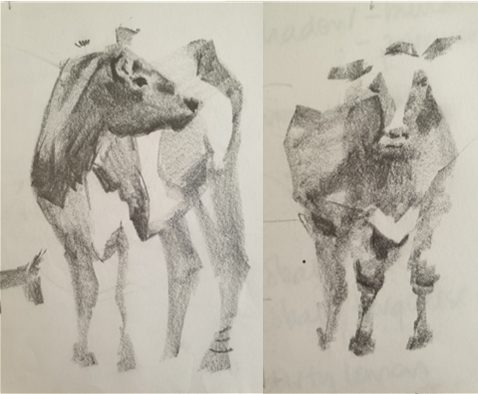 ode to country & western!! ode to country & western!!
edited from my original post 070115
It’s really hard to create a painting about a subject I have no interest in, having said that, I can make myself want to paint a particular subject simply by working through a research process and getting to know and appreciate the subject. Imagine what it would be like for me to be told Country & Western theme ... ?**$#@!!**^?? Guess what? You can get fired up about any subject too!! While I was still working in the corporate world but dabbling in watercolour painting, I was thrilled that my tutor would supply the subject matter. It meant one less thing for me to worry about, all I had to do was turn up every week and she'd have an amazing array of cool stuff she had pulled together for us. Barbara was a tremendous creative facilitator. Another upside to this was that I learned to accept what was in front me, whether I liked it or not, this was no time to be fussing and complaining, I had 3 hours of painting time in front me, better get to it quick! In writing this post I realise too, part of my inspiration for a subject came from our group discussion about the subject and everyone's ideas. Some of my best painting experiences have been painting in a group. The more research I do about a particular subject the more passionate and determined I become to paint it. I fall in love with the subject ... it could be something as simple (?) as a brick wall or the way the light falls on a glass and the shapes and colours it creates. The intricacies of a subject become fascinating, although I don’t paint a lot of detail (this must have been written a while back!), I go through a process of studying the detail and deciding what I will leave out, what to include and which details describe my message best for that piece of art. Typically my research might include a small sketch or two on site as well as a bigger more formed sketch I call a plein air painting. When I’m in my studio, if I’m painting from my imagination, I create lots of doodles and lots of composition thumbnails. I’m reluctant to paint scenes from a photo preferring to paint en plein air, not always possible and although I’m wary, I’m very happy with a lot of them. For me, there is a driving force to create and always has been. Among other creative endeavours, I’ve always drawn and painted. It seems stronger now than ever and I think this may be, in part, because I work as a professional artist creating and painting most days - total immersion is good! My brain is more switched on to looking for subject matter and planning my next work – everywhere I see a painting waiting to be painted. The more I look for subjects the sooner they appear - the more I paint the more ideas I get. Happy painting!! ciao amici!!
|
AuthorPaintBox Tips, secrets, random thoughts, 
Poetry in watercolour is made in the freedom of the here and now. Amanda Brett Inspiration exists, but it has to find you working - Pablo Picasso 
There are no mistakes in watercolour, just some extra surprises!! Categories
All
What my readers and viewers have to say
Your emails are so informative! I must confess I've watched a couple of your demos from beginning to end, and it makes me want to watercolor!!! I've only ever painted with oil or acrylics and haven't know how to begin with WC. Your content is excellent!
Susan VN Hi Amanda
Thank you for your tips. They inspired me to practise and I realised I haven’t been loading the brush properly. I learnt about adding more paint, and not water, to washes. In today’s tips I like the idea of painting with purpose. Your tips are very helpful. I very much appreciate receiving them. Elizabeth Hi Amanda I enjoyed your post and generous tips. Looked up Dan Burt I begin to see that you can colour any subject to give it pizazz so long as the tone and form is correct Certainly adding value now to my attempts Thanks heaps Annie
Yes very wise words. Agree with not fussing and agree with comments about good quality paint. Well written and inspirational as always. Cheers Janet xxxx Archives
July 2023
Copyright © 2022 All images and text on Amanda's blog and website are the the legal property of Amanda Brett and may not be reproduced without express permission from Amanda Brett or her authorised agent. Thank you for respecting her art and the livelihood of all artists.
|